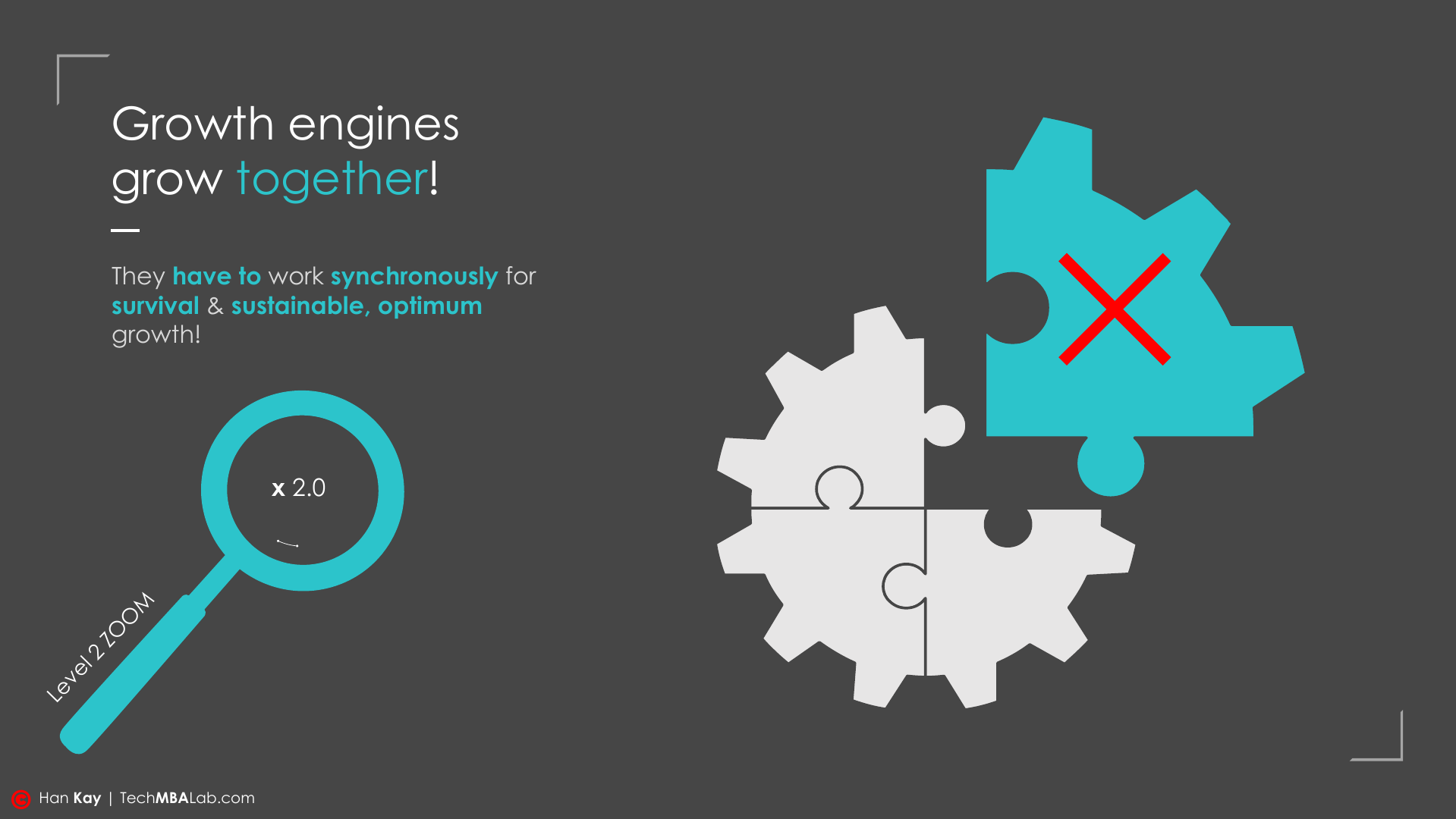
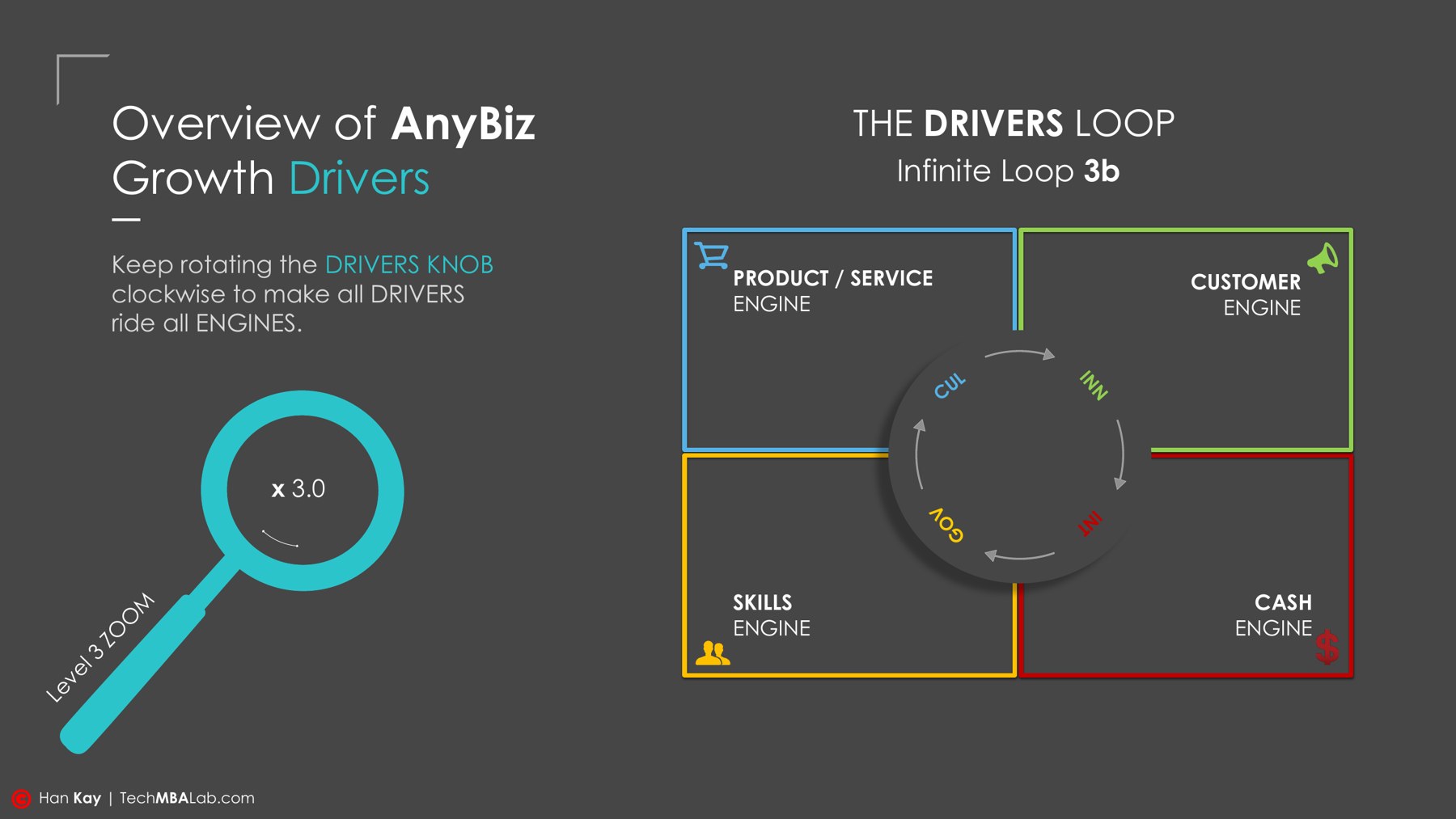
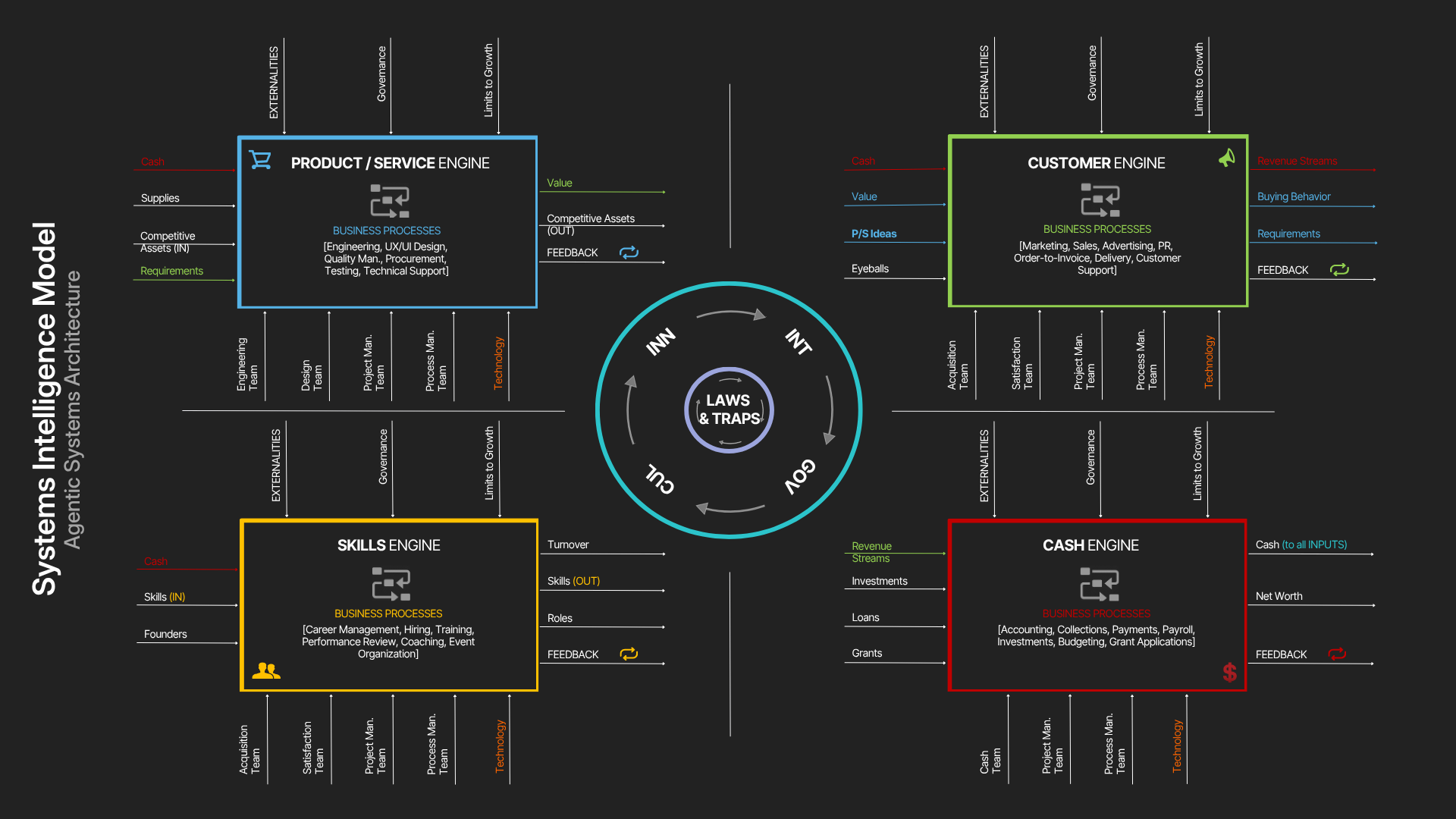
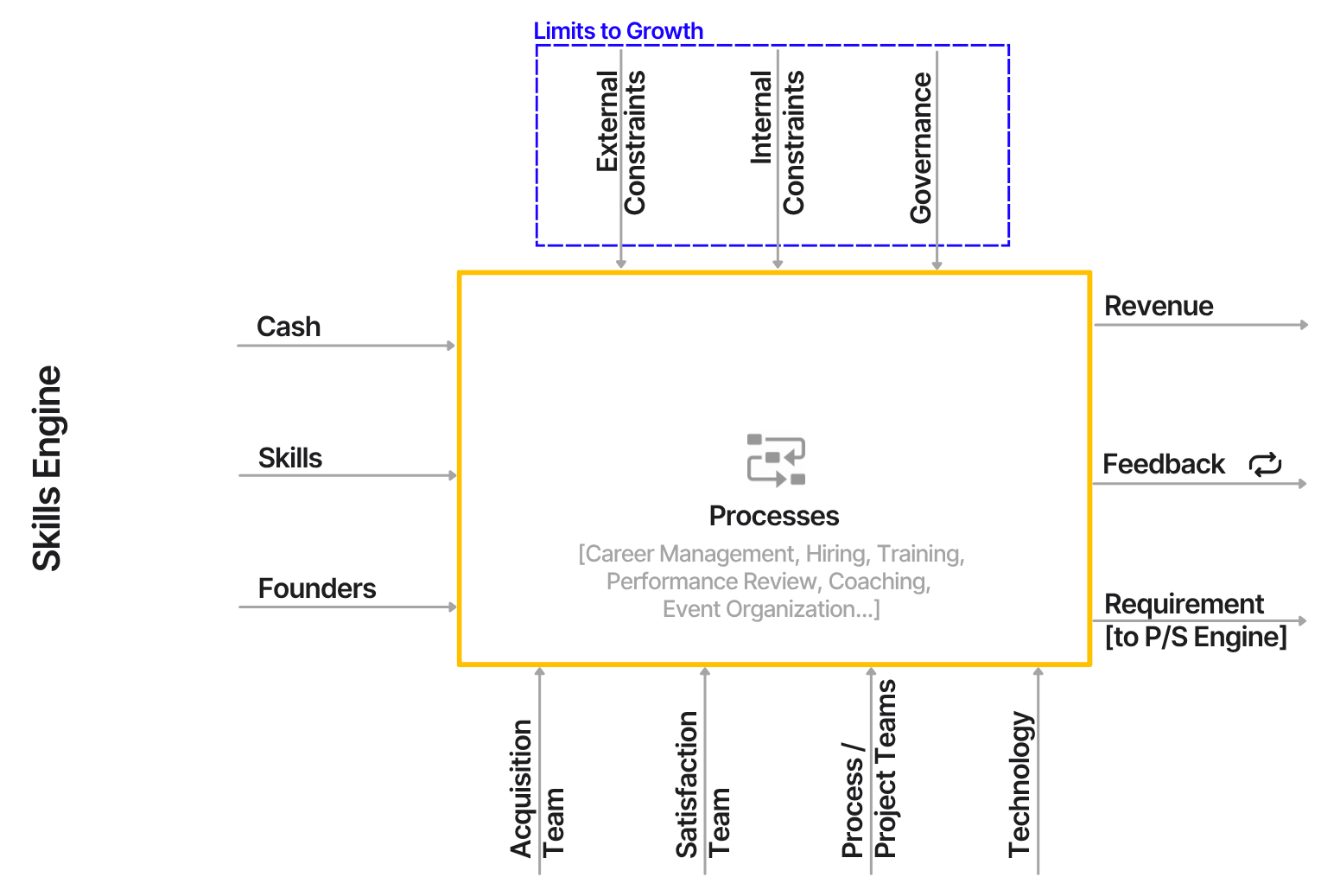
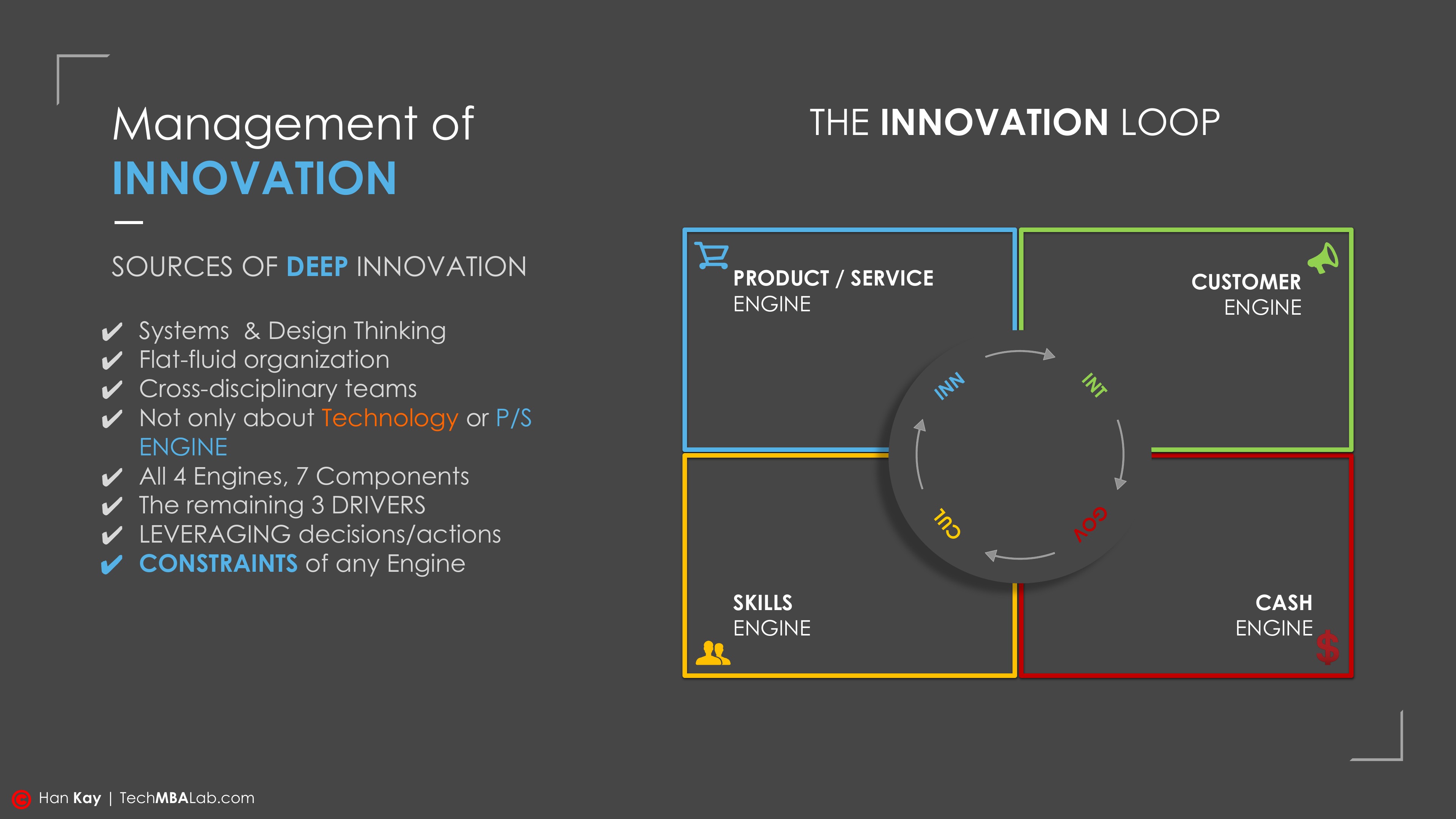
Four complete Engines. Four coordinating Drivers. Laws and Archetypes at the center.
Today we read with it. In the cohort, you learn to design with it.
The read
The twenty-minute method.
Surface
What looks successful or broken?
Engine
Where is value accumulating or leaking?
Driver
What coordinates, or fails to coordinate?
Pattern
Which law or archetype explains recurrence?
Leverage
Where would one structural move change the most?
The proof case
Read Apple
Extraordinary coherence under a new kind of stress.
Apple as a living system
"Apple is a complex, multicellular organism."
The line is old. The diagnosis still holds. Coordination is the story.
Surface view
The Apple paradox.
How can the same system produce iPhone, Apple Silicon, and a world-class services engine, yet struggle to make Siri feel inevitable?
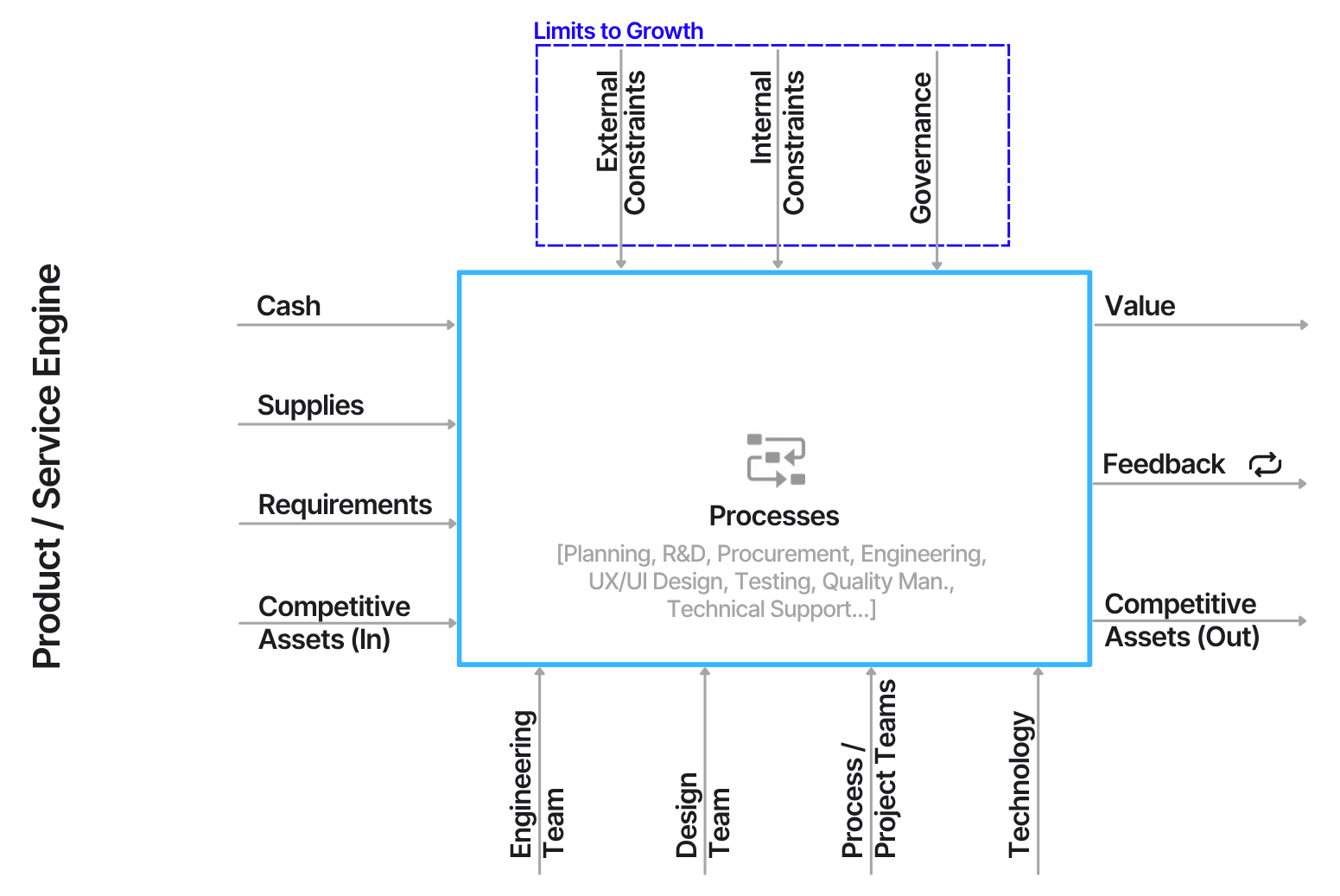
Product / Service Engine
Apple's core pattern is integrated experience.
Hardware, software, silicon, services, retail, and brand do not sit beside each other. They reinforce each other.
Product / Service anatomy: point to the loop, not the product list
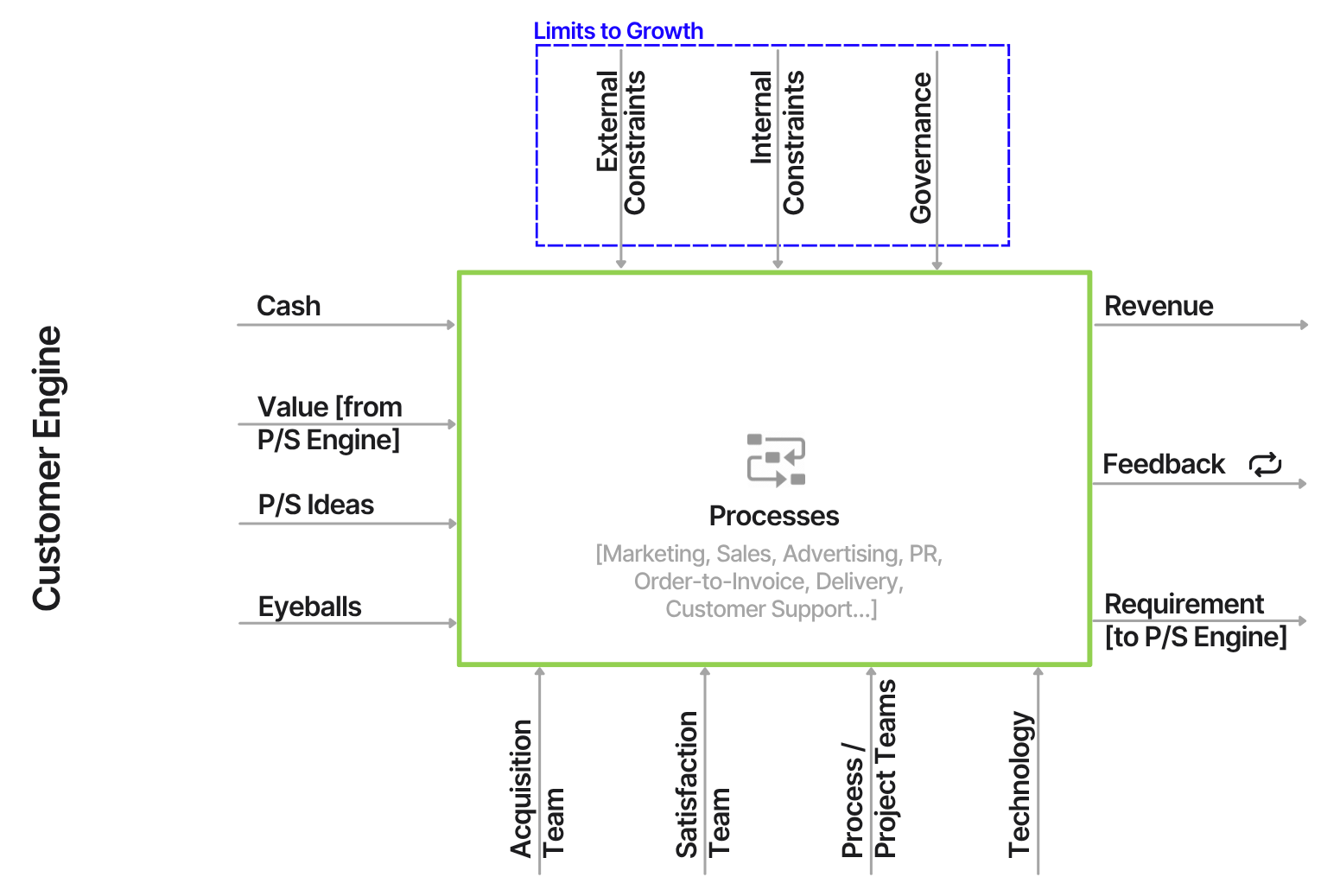
Customer Engine
Apple turns trust into infrastructure.
Identity, privacy, ecosystem familiarity, retail support, switching costs, and emotional trust keep feeding the Product Engine.
Customer Engine
Feedback is the asset. It must return to the whole system.
Customer feedbackRequests, returns, desired features, engagement, and process friction.
→
ActorsInputsGovernanceBusiness processesOther EnginesAll four Drivers
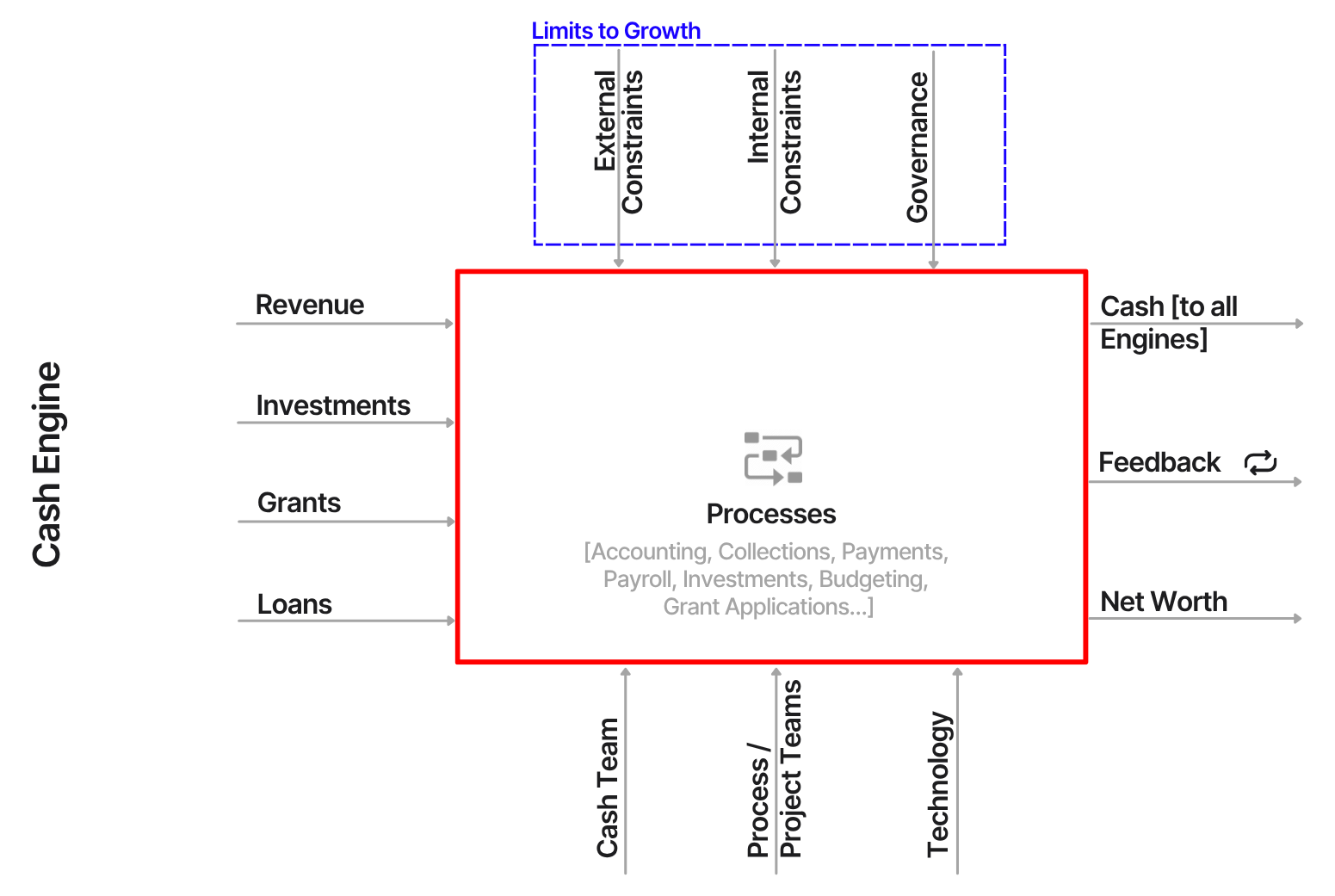
Apple's Cash Engine: optionality through resource flow
Skills Engine
The skill is not one genius.
Apple repeatedly produces integrated decisions across product taste, operations, silicon, privacy, launches, and supply chains.
Capability strength is not the same as capability fit.
Driver read
Every strength carries an AI-era tension.
Innovation
Disciplined focus / open-ended experimentation
Governance
Integrated decisions / concentrated pathways
Interaction
Compressed complexity / controlled feedback
Culture
Finished-product excellence / living AI relationship
Diagnosis poll
What is Apple's real AI constraint?
Model
Raw capability
Data + feedback
Learning signals
Skills
Capability fit
Coordination
Engines and drivers
The systems answer may be more than one box.
The AI stress test
Secrecy protects finished products. AI needs living feedback.
Apple's confidentiality has protected integration, surprise, and competitive advantage.
But an AI relationship needs data fluidity, fast feedback, open-ended learning, and probabilistic evaluation. A historic strength can become an internal constraint when the product physics change.
The Siri diagnosis
An engine-and-driver mismatch.
Engine
New AI capability must compound inside the Skills Engine.
Innovation
Learning velocity must rise without losing discipline.
Interaction
Feedback must travel faster across users, models, products, and decisions.
Culture
The mental model expands from finished product to evolving relationship.
A systems hypothesis from public evidence, not a claim of insider knowledge.
The recurring pattern
Limits to Jump
Limits to Growth is the number-one management trap: the architecture that produced historic success encounters a new constraint when the product physics change.
Constraints are not only external. They can sit inside goals, rules, capabilities, governance, or feedback. Pushing the old strength harder does not remove the new constraint.
The leverage question
What would Apple have to redesign so AI can compound inside its system without violating what makes Apple Apple?
The likely leverage: feedback, capability, and coordination loops that preserve privacy and integrated experience.
Transfer
Read your own system
Apple is the proof. Transfer is the lesson.
Your turn
Choose one company or venture.
Your startup. Your employer. Your product. Your personal operating system.
Do not make it perfect. Make it visible.
Four engine questions
Product / Service
Is value actually reaching people?
Customer
Are the right people finding, trusting, and staying?
Cash
Do resources flow toward what is working?
Skills
Is capability growing faster than the problem?
Find the bottleneck
Name three things, then one Driver.
Engine
Which engine is limiting the rest?
Input
What input is missing or distorted?
Loop
Which feedback loop is broken?
Driver
What is failing to coordinate it?
Before AI
Will AI amplify a healthy engine, repair a weak engine, or accelerate a broken pattern?
That one question prevents most AI waste.
Do this Monday
The twenty-minute systems audit.
Map
Draw the four engines.
Mark
Circle one weak engine.
Name
Find the driver failing to coordinate it.
Move
Write one structural intervention.
Change the system, not just the symptom.
Turn diagnosis into design
Systems Intelligence is the ability to read the architecture underneath behavior.
Once you can see the architecture, you stop arguing with symptoms. You start designing leverage.
A twenty-minute read can name the bottleneck. Six weeks lets us redesign the system around it.
The cohort value stack
Language, judgment, a living map, and tools.
Playbook
The complete SIM language and 500+ page reference.
Live coaching
Practice, feedback, judgment, and peer critique.
Architecture Map
Your diagnosed, AI-integrated living deliverable.
Software
Tissuu for the Customer Engine. SimOne for SIM-native coordination. Guided early access.
The playbook gives you the language. Coaching develops judgment. Software keeps the model alive.
Where this goes next
Systems Intelligence - Cohort 1
July 26 - August 30, 2026 6 weeks · 12 live sessions · 21 lessons · 5 projects
You leave with a diagnosed, AI-integrated Systems Architecture Map.